2025 Metal Cutting Industry Outlook - Automatic Band Saw Machines in Industry 4.0
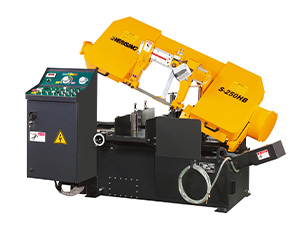
As professionals in the metal-cutting industry, we have seen how rapidly manufacturing expectations are evolving. The arrival of Industry 4.0 has reshaped what defines an effective cutting machine. Power and precision remain essential, but intelligence, connectivity, and adaptability now determine long-term competitiveness.
The Shifting Landscape of Metal Cutting
The demand for advanced metal-cutting solutions continues to accelerate. The global metal cutting tools market is projected to rise from USD 82.24 billion in 2024 to USD 86.24 billion in 2025 (CAGR ~7.3 %) from Fortune Business Insights. Meanwhile, the CNC metal cutting machine tools market is forecast to expand at ~10.2 % CAGR from 2025 to 2034 (GlobeNewswire). Within that context, the band saw machine segment, albeit smaller, is estimated to grow steadily - Fact.MR projects the global band saw machine market to reach about USD 4.96 billion by 2034 (at ~3.6 % CAGR). That growth is being driven by several converging trends:
These figures reflect what we observe daily in workshops and factories around the world:
- The drive to minimize scrap, downtime, and operating costs
- The need to handle mixed materials and short production runs
- Growing focus on sustainability and energy efficiency
- Increasing demand to upgrade legacy machines with smart capabilities
Together, these pressures are pushing the industry toward a new generation of automatic band saw machines — systems that combine mechanical reliability with digital intelligence.
Smart Monitoring: The Core of Industry 4.0 Cutting
In modern manufacturing, data is as vital as steel or coolant. We now design and operate machines that can monitor themselves in real time — tracking vibration, acoustic signatures, temperature, and power consumption.
When a saw detects an unusual vibration pattern or a rise in temperature, it can automatically adjust feed rate or alert operators before a problem occurs. These insights transform the way we approach preventive maintenance and process optimization. Instead of reacting to failures, we predict and prevent them.
This shift doesn’t just reduce downtime; it also improves cut quality, extends tool life, and creates a more stable, traceable production environment.
Designing for the Modern Operator
As automation becomes more capable, usability becomes equally important. Operators no longer want to manage an array of switches and dials - they expect intuitive control systems, diagnostic dashboards, and meaningful data visualization.
Modern automatic band saws now feature:
- Unified, touchscreen interfaces
- Real-time dashboards for tool life and performance indicators
- Modular design for easier customization and upgrades
- Energy-efficient drives that reduce idle consumption
- Connectivity for IoT and factory network integration
In essence, we are designing machines that work with people, not just for them - tools that simplify decisions, guide adjustments, and make high precision accessible to every operator.
Material Intelligence: Adapting to Every Cut
Every material has its own behavior under the blade, and understanding these differences is key to smart cutting.
Steel:
Steel demands slower blade speeds, steady feed rates, and consistent coolant delivery. Monitoring blade temperature and vibration helps prevent wear and ensure stable performance.
Aluminum and Non-Ferrous Metals:
Aluminum’s ductility can cause chip adhesion and clogging. Higher speeds, optimized tooth geometry, and torque-based feedback help maintain clean, efficient cuts.
Specialty Alloys:
Titanium, Inconel, and similar alloys generate high cutting forces and heat. Carbide-tipped blades, robust coolant systems, and sensor-based adaptive control prevent excessive stress and ensure precise results.
By building systems that automatically switch between optimized cutting profiles, we make it easier for manufacturers to handle diverse materials within the same workflow.
Practical Applications of Smart Band Saws
Retrofitting Existing Equipment:
Many factories are transforming traditional machines into connected assets through sensor retrofits. By adding vibration and temperature monitoring, older equipment gains new life as part of a smart ecosystem.
Automated Cutting Cells:
In automated production lines, band saws are no longer isolated machines. They communicate with robots, conveyors, and quality systems, sharing performance data and responding dynamically to upstream or downstream changes.
Precision Small-Batch Production:
For custom or short-run jobs, digital feedback ensures that each cut remains within tolerance — even as materials or operators change.
The Real Benefits
The shift toward intelligent automation brings tangible results:
- Reduced Downtime: Predictive maintenance prevents costly interruptions.
- Extended Tool Life: Smart control systems prevent overloading and uneven wear.
- Higher Cut Quality: Real-time parameter adjustments minimize vibration and chatter.
- Operational Visibility: Data dashboards reveal trends and performance gaps.
- Future Integration: Smart saws connect easily with MES and ERP systems for broader process control.
Key Implementation Lessons
We’ve learned that introducing intelligence into cutting systems requires balance. The placement and calibration of sensors matter as much as software sophistication. Too much data or too many alerts can overwhelm operators, so clarity and usability are crucial.
Mechanical fundamentals remain equally important. No amount of analytics can compensate for poor rigidity or misalignment. The best smart systems start with solid engineering.
Looking Ahead: From Machine to Intelligent Partner
As we move through 2025, automatic band saw machines are becoming integral players in smart manufacturing. They are no longer simple cutting tools but intelligent partners — systems that monitor, adapt, and improve over time.
By combining advanced sensing, adaptive control, and digital connectivity, we are entering a new phase of metal cutting — one defined by precision, efficiency, and continuous learning. The future belongs to those who not only cut metal efficiently but also understand the data behind every cut.